Balaclavas for karting tracks: 14 things to check before choosing a supplier in the EU
If you want to choose balaclavas for a karting track and not regret it after the first weekend, look at three things in the product:
- material and weight (g/m²), not "piece weight,"
- fit under a helmet – does it pinch or slide over the eyes, and
- color resistance to sweat and friction, especially in dark colors.
Then rate the supplier:
- whether his goods comply with EU standards (including GPSR, REACH) and documents confirming this, and in case of problems, how they will respond,
- how long does it take to process and delivery?
- can they quickly deliver missing items from the warehouse, and whether they will provide express replenishment in case of failure – even with a logo.
If you check these points, you will avoid 90% of problems: complaints, bad reviews, and situations where "the track is at a standstill because there are no balaclavas."
table of contents
1. Fabric weight—why it matters and how to choose the right one for your track
Weight is a quick, practical indicator that helps predict how balaclava perform on the track: whether it will react to friction under the helmet, will it be comfortable, and will it absorb sweat well (which also has a real impact on helmet hygiene).
Simply put, it’s the amount of fabric per square meter (g/m²) — this metric allows you to compare fabrics objectively, regardless of the balaclavas cut.
The rule is simple: the higher the weight, the thicker and more durable the fabric, but also the less breathable. These relationships are confirmed by numerous studies and research papers.
A dedicated guide on choosing the right weight and material balaclavas track conditions will help you understand these differences—such as why we always produce our balaclavas 160 cotton balaclavas in a practical black color .
Sources: An Investigation of Bursting Strength in Single Jersey Weft-Knitted Fabrics, Effect of Knitting Parameters on Moisture Management and Air Permeability of Interloc Fabrics
Sample comparison table
| Weight | Advantages on the karting track | Disadvantages/risks | When to use |
| 160 g/m² | less "bulk" under the helmet, greater breathability, good for warm days, lower unit price | loses stability more often and more quickly, feels "less solid," weaker protection for the helmet and rider against sweat (lower absorbency), lower thermal protection | summer, tracks in warmer climates, customers sensitive to pressure when fast rotation is important |
| 200 g/m² | compromise between comfort and price; impression of "solidity," good sweat absorption | in hot weather, some people prefer thinner | all year round, when you want the best price/quality balance |
| 220 g/m² | "Premium feel," often more compact, high sweat absorption (protection for the helmet and rider) and thermal protection, high material stability | in hot weather, some people prefer thinner | all year round, when comfort and a sense of quality/durability are priorities |
2. g/m² vs. "unit weight" — a common purchasing trap
Buying "by weight per piece" (e.g., 35g per piece) is the most common mistake managers make. The weight per piece depends on the cut— balaclava long balaclava thin fabric may weigh the same as a short one made of thick knit fabric. Only the g/m² parameter guarantees that you are buying fabric of a specific density that will not change with your next order.
Source: Textiles – length and mass per unit area (…)
Remember: ask your supplier for specifications including weight, composition (elastane!), and dimensions balaclavas. Without this information, you cannot be sure that you will receive the same product as last time.
How to measure the exact width and length balaclavas yourself? Turn it inside out.

3. Knit density and transparency after stretching
Even if two balaclavas the same GSM, they may perform differently. The way the fabric is knitted (e.g., the length of the loops) affects its durability and coverage—a looser knit is usually less stable.
Source: Evaluation of Physico-Mechanical Properties (…)
On the track, this could mean that balaclava "slip" under the helmet, distracting the rider.
Try this simple test: stretch the fabric tightly in your hands. If it forms a see-through mesh that doesn’t return to its original shape, your customers may complain about comfort.
4. Composition: 100% cotton vs elastane blend — why do you need elastane on the track?
Spandex isn't a required ingredient, but it often helps balaclava retain its shape balaclava (known as " elastic recovery")
Source: Effect of Elastane on Single Jersey Knit Fabric (…)
Thanks to this, it fits the face like a "second skin" and does not shift when putting on a helmet. The addition of elastane can be particularly useful for balaclavas with higher weights (e.g., 200 g/m² or 220 g/m²).

5. Balaclavas for karting tracks – Fit and safety
6. Polyester blend — when it makes sense and what to watch out for
A polyester blend in a balaclava can be a good choice if you are looking for:
- greater durability (the material is more resistant to wear and tear and frequent washing),
- faster drying — which can be an advantage when used frequently with breaks for evaporation.
Note – sweat and comfort under the helmet:
If your head is very sweaty, the helmet may feel like it’s “slipping,” and it may not maintain the hygiene of your helmet fleet as well. Always test polyester blends directly on the track before purchasing a larger batch.
To help you make this decision, we’ve prepared a detailed comparison of the properties balaclavas and cotton balaclavas , explaining how synthetic fibers perform during intense riding.
7. "50/50 recycled"? Double-check! Health and legality
- Health risks (skin contact): Under the helmet, where high temperatures, sweat, and friction are present, there is an increased risk of unknown chemicals coming into contact with the customer’s skin and respiratory tract. Source: Consumer exposure to chemicals in clothing (…)
- Legality (label and declarations): “50/50” on the label is a specific declaration of composition that must be verifiable and consistently labeled. Given the nature of the recycling process, this can be a difficult task; if the composition does not match (beyond the specified tolerances), you risk allegations of misleading consumers and compliance issues within the EU.
8. Dark colors and dyeing under a helmet – the "truth test"
Nothing damages a track’s reputation faster than a customer who has dark streaks on their face after taking off their helmet. Cheap dyes, combined with the acidic pH of sweat, cause the color to run. It’s not just a matter of aesthetics; it’s a health issue (risk of skin allergies).
Source: Exposure of consumers to chemicals in clothing (…)
In practice: always ask the supplier about the color's resistance to rubbing and sweat. This simple question can save you complaints, bad reviews, and unnecessary stress during possible inspections.
9. Chemical safety and REACH standards: why does this even matter for balaclavas?
Source: List of substances required (…)
The entire process of verifying suppliers in this regard is described in detail in our A guide to REACH and Safety Gate safety standards for track operators.10. GPSR: documentation and responsibility in the EU — check this before the first packages arrive
Source: Regulation (EU) 2023/988.

11. "Does this balaclava a tag?"
Source: Regulation (EU) No 1007/2011
That is why strict adherence to these standards is the cornerstone of our policy product safety and proper labeling.12. Repeatability between deliveries: the problem usually starts with the second and third orders.
The biggest problem in B2B starts with the second and third orders. Will balaclava in September have the same cut and elasticity as the one from March? Request consistent technical specifications (GSM tolerance and dimensions). It is also worth comparing goods from different deliveries and sticking to it for subsequent orders.
13. Logistics – this is your "weekend insurance" on the track
This is what hurts the most in card rental: the busiest times are weekends, and shortages usually occur when the stock is running low. Therefore, evaluate the supplier not only by the product, but also by the system:
- warehouse and logo printing in the EU,
- predictable additions and delivery schedule delivery schedule,
- urgent intervention in case of emergency and
- communication based on specific dates and numbers.
Ask directly: “If I see that I’m going to run out of balaclavas this weekend balaclavas what can you realistically do, and how soon (including the logo)?”
Quick access to branded accessories—where the print is placed, for example, on the left side of the neck, as is standard on our cotton models—is a key advantage, which we discuss in more detail in an article explaining why balaclava a track logo significantly boosts sales profitability.
14. "Quick sample quality test"
It's simple but effective:
✅ Put on the balaclava → check the pressure on your nose/jaw.
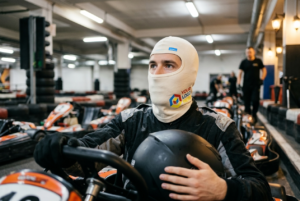
✅ Put on the helmet → check that the face opening does not move.
✅ Stretch the fabric and release → does it return to its original shape (this brings us back to the topic of elastic recovery and elastane).
✅ If dark in color: damp white cloth + light rubbing → does it leave a mark (preliminary risk screening).
Summary
Always compare offers by g/m² + composition + fit, as this determines consistent quality and comfort on the track, and also test the physical product before placing a large order.
What to always watch out for (4 red flags)
🚩 The supplier avoids mentioning g/m² and only talks about the "weight per piece."
🚩 Chaos in EU compliance and labeling (GPSR/composition) and lack of clear responsibility for quality.
🚩 No specific deadlines for completion,
🚩 No "contingency plan" for 24–48-hour replenishment (warehouse in the EU, express delivery, clear rules) — and this determines whether you sell on weekends.
FAQ
What should be the weight balaclavas a karting track?
The most optimal weight for balaclavas karting tracks is between 160 and 220 g/m². Material that is too thin (below 140 g) can quickly become saturated with sweat and be uncomfortable, which spoils the driver's "feeling." On the other hand, balaclava that is too thick balaclava above 220 g) may make it difficult to put on a helmet or be too hot. Choose the specific weight of the material according to the season, the type of activity (indoor/outdoor), the temperature and humidity at your facility, as well as how you want to position your brand in the kart rental market.
How do balaclavas on a karting track actually increase profits from each customer?
Selling balaclavas is the easiest way to ensure that everyone who visits your track leaves more money at the cash register without having to raise ticket prices. It's so-called "quick money" with a high margin. Remember that customers don't just pay for hygiene – they pay forthe experience. When they put on a balaclava, they stop being a "tourist in a go-kart" and start feeling like a professional driver (the so-calledHamilton feeling). This makes them more willing to buy additional rides, and you earn more from the same number of people who are already on the track.
Does the material composition of balaclavas for a karting track matter?
Yes, the material composition is crucial. The best balaclavas are made of cotton blends with elastane (providing natural breathability + elasticity) or advanced thermoactive materials. Products from certified EU suppliers are certified as safe for the skin during intense exercise (compliance with EU REACH and GPSR standards). Avoiding untested compositions protects the track owner from legal liability and customer complaints.
Why is choosing balaclavas for a karting track from an EU supplier crucial for business continuity?
Choosing a supplier from the European Union guarantees supply chain stability and compliance with strict safety standards. In the karting business, "downtime means money lost." A local supplier allows you to avoid logistical problems (customs delays, lack of certificates) that plague cheap imports from Asia. This ensures that the track has a constant supply of products, which directly affects customer satisfaction and operational fluidity. Also, remember that when you import goods from Asia for your karting track yourself (placing them on the EU market), you are fully responsible for the compliance of the material and chemical dyes with EU standards and other issues.
Are Humboo balaclavas individually packaged?
Yes, balaclavas from the manufacturer Humboo can be individually packaged in foil bags with a branded design. The packaging is designed in such a way that your logo print on the balaclava always remains visible (special transparent part of the packaging). Then we place 40 individually packaged balaclavas in ahandy counter box, whichyou can place at the reception desk of your track, streamlining the work of your staff.
Our customers' experience shows that the balaclava for a karting track logo in individual packaging significantly enhance the professional look of the facility and have a positive impact on customer satisfaction. Individual packaging of balaclavas is an alternative to bulk packaging of 50 pieces in plastic bags.
What colors of balaclavas sell best at karting tracks?
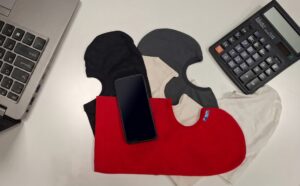
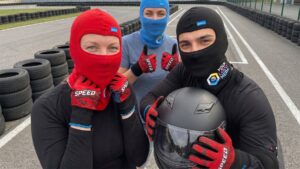
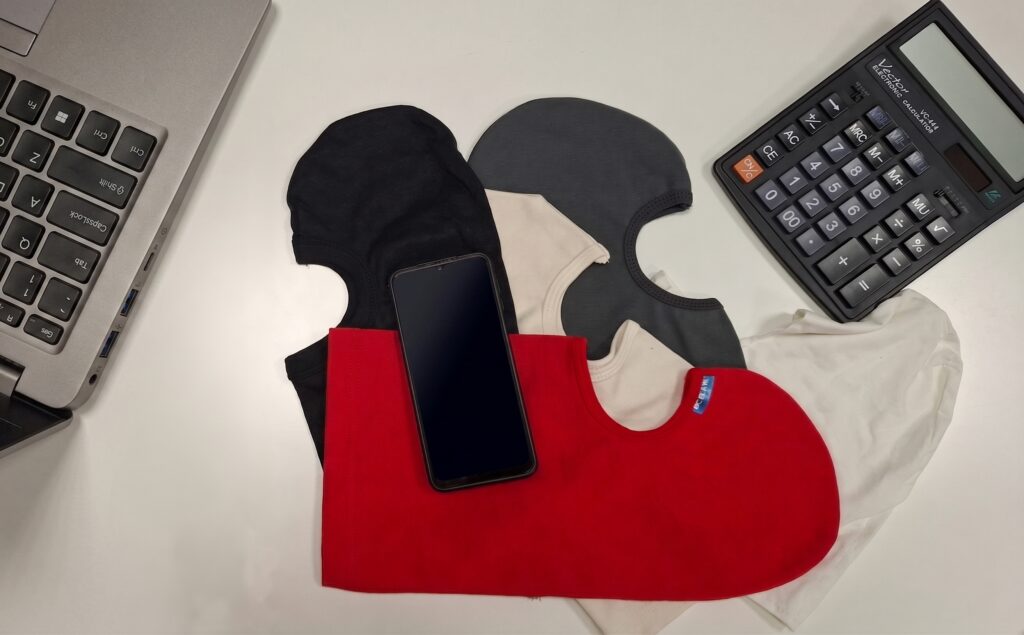
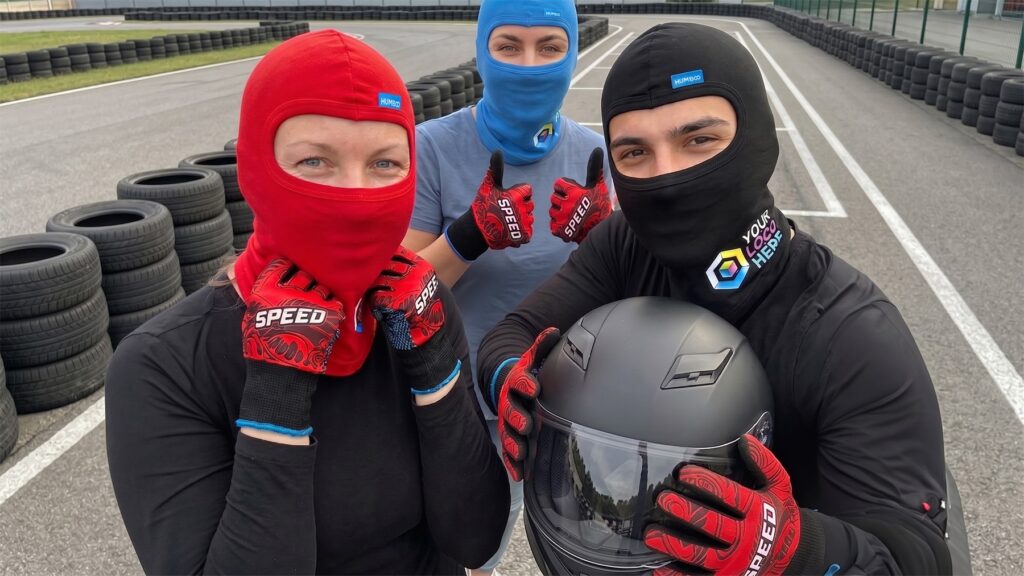
Most tracks opt for universal black, but adding red and blue balaclavas , for example, boosts sales and builds the "race experience." Colors also make management easier, for example, by distinguishing karting school students. However, exercise restraint: too wide a range risks stockpiling and operational chaos. A safe solution: opt for a professional black base and a maximum of two or three additional variants to increase your margin without freezing cash in the warehouse.
Who in the EU is responsible for balaclavas at racetracks?
It depends on where you buy them: the more you import goods into the EU yourself, the more you are responsible.
- EU manufacturer:this is the responsible entity (including GPSR/REACH standards/labeling).
- EU intermediary:make sure that the product and documentation clearly statewho in the EU is responsible(manufacturer/importer) for ensuring that the goods comply with EU standards.
- Importing from Asia for your own company:in practice, you becomean importer– you take care of GPSR/REACH documentation, correct labeling, batch traceability, and you are liable if something causes an allergic reaction in a customer or in the event of a random inspection.
Sources:
- Ghosh, K. (2022). Investigation of bursting strength on single jersey weft knitted fabrics. IOSR Journal of Polymer and Textile Engineering (IOSR-JPTE), 9(5).
- Effect of knitting parameters on moisture management and air permeability of interlock fabrics. (2014). AUTEX Research Journal, 14(1).
- International Organization for Standardization. (1977). Textiles—Length and mass per unit area (ISO 3801:1977; reaffirmed 1983). International Organization for Standardization.
- Evaluation of physico-mechanical properties of 1×1 interlock cotton knitted fabric due to variation of loop length. (2014). International Journal for Research in Applied Science and Engineering Technology.
- Effect of elastane on single jersey knit fabric properties—Physical & dimensional properties. (2014). International Journal of Textile Science.
- European Chemicals Agency. (2018). Exposure of consumers to chemicals in clothing, textiles, and footwear. European Chemicals Agency.
- European Parliament & Council of the European Union. (2011). Regulation (EU) No 1007/2011 of the European Parliament and of the Council of September 27, 2011 on textile fiber names and related labeling and marking of the fiber composition of textile products and repealing Council Directive 73/44/EEC and Directives 96/73/EC and 2008/121/EC. European Union.
- Reddit. (n.d.). Balaclava under helmet [Online forum post]. r/motorcycles. Retrieved February 10, 2026.
- European Chemicals Agency. (2026). Substances restricted under REACH. Retrieved February 10, 2026.