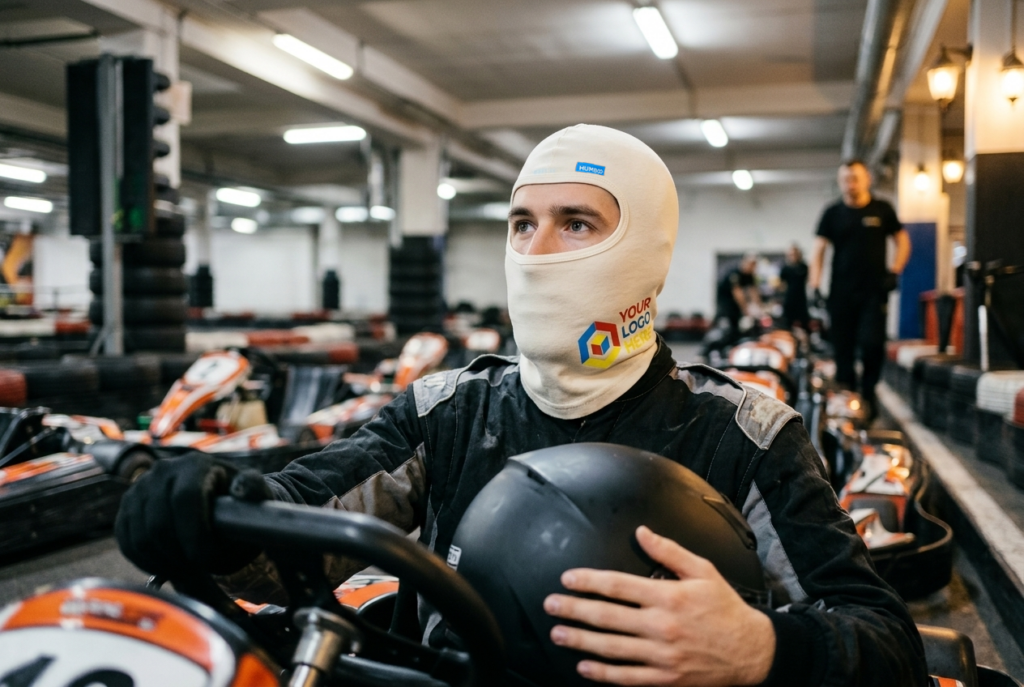
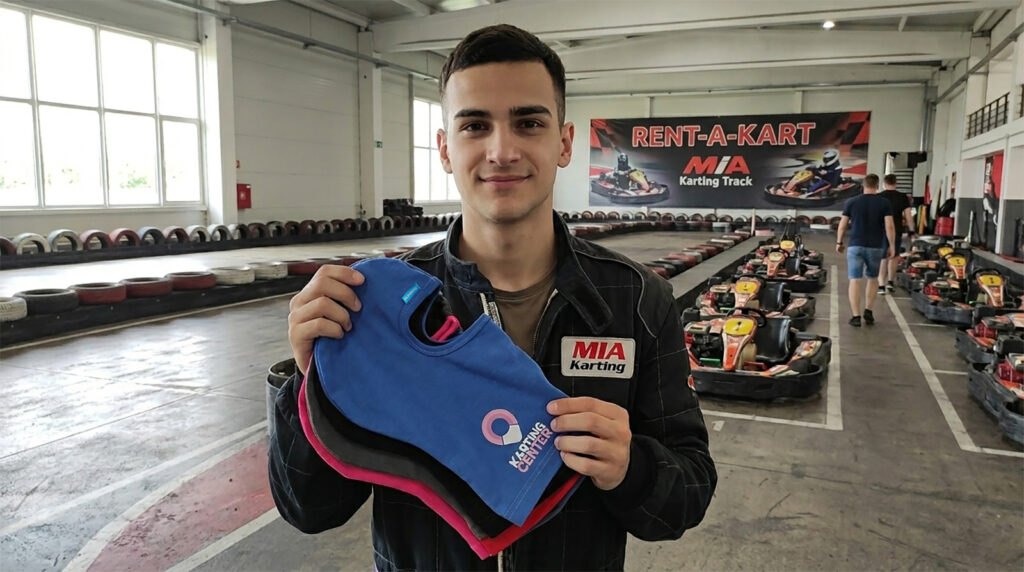
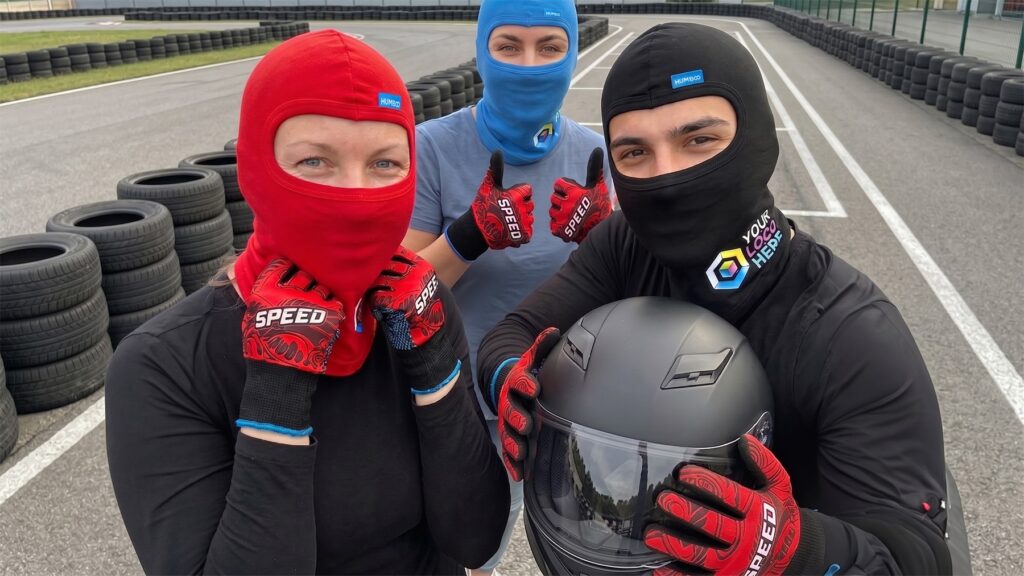
The choice between cotton and thermoactive materials is one of the most important purchasing decisions for a track owner, directly affecting the hygiene of the helmet fleet and customer satisfaction. The material from which balaclava is made determines thermal comfort during intense sessions and allows the offer to be tailored to the driver's profile – from Sunday amateurs to professional karting league competitors.
To ensure your track offers the highest standard of service, you need to understand how differences in fiber structure translate into performance:
Cotton (absorption): Thanks to its natural properties, it absorbs moisture into the fiber, making it the optimal choice for short recreational rides and mass events.
Thermoactive polyester (transport): Uses technical mechanisms to wick sweat away, which is essential for long races and regular track users.
Appropriate division of the product range in terms of cotton vs. thermoactive materials allows you to avoid 90% of typical problems: sweaty helmets, customer complaints about "wet heads," and low margins on accessories sold at the reception desk.
table of contents
1. Materials science in the service of karting
balaclava the first and most important hygiene barrier on a go-kart track.
Although at first glance they differ only in price and appearance,
, cotton and technical polyester actually serve completely different physiological purposes. In the ski rental industry, choosing the right material involves striking a balance between initial comfort and performance during extreme exertion.
It is worth noting that, regardless of the material chosen, every balaclava on the market in the EU must meet specific legal requirements regarding chemical composition and labeling.
We explain the specific risks of non-compliance in a separate guide: Safety balaclavas – REACH and Safety Gate standards.
2. Balaclavas – classic style and recreational comfort
Cotton, as a natural fiber, has dominated the rental market for decades due to its versatility and low barrier to entry. Its hydrophilic nature means that the fibers can absorb moisture up to 25% of their weight before the material feels wet to the touch.
-
Advantages and limitations: During a standard 10-minute ride, cotton effectively "locks" sweat in its structure, protecting the helmet lining from direct soiling. However, it is important to remember its disadvantage: cotton dries slowly. During longer sessions, moisture trapped in the fibers can lead to head cooling, creating the so-called wet compress effect.
- Why customers appreciate it: For people who visit the track infrequently, a pleasant "hand feel" is key. Cotton is soft, does not generate static electricity, and inspires confidence as a natural material. From a B2B perspective, fabric with a weight of approx. 200 g/m² is a great base for durable and inexpensive screen printing or DTF marking.
If you’d like to learn more about choosing the right thickness for the conditions at your facility, read our detailed guide: How to Choose a Balaclava? Weight, Weave, and Material vs. Temperature.
3. Thermoactive balaclavas – engineering for professionals
When comparing cotton to moisture-wicking fabrics, polyester blended with spandex represents a purely technical approach. These are “breathable” products whose primary purpose is not to trap moisture, but to quickly wick it away from the skin’s surface.
-
Moisture transport mechanism: Thanks to specialized mesh or teardrop weaves, sweat is transported to the outer layer of the fabric, where it immediately evaporates. This mechanism (known as the wicking effect) keeps the driver's head dry even during the most demanding league races.
-
Durability and aesthetics: Synthetic fibers are much more resistant to mechanical deformation than cotton. Technical polyester retains its "shape memory," which prevents the face opening from stretching even after many wash cycles.
4. Technical comparison – Table of parameters
| Feature | Cotton (200–220 g/m²) | Thermoactive polyester |
|---|---|---|
| Moisture management | Absorption (absorbs sweat) | Wicking (wicking away sweat) |
| Drying time | Very long | Very short |
| Shape retention | Average | Very high |
| Printing options | Screen printing / DTF | Sublimation (full print) |
| Unit cost | Low | Medium/high |
| Purpose | Recreation / groups | Sports / league drivers |
5. Sublimation: The image advantage of polyester
For track owners, thermal transfer materials are a powerful branding tool. Sublimation technology enables 360° full-print coverage, opening the door to designs that mimic helmets, camouflage patterns, or bright fluorescent colors. Personalized premium accessories sell much better in merchandising—customers are more likely to purchase a product that looks professional and allows for eye-catching branding.
Learn about the different types of printing on balaclavas, neck warmers, and gloves—how do we choose the right technology?
6. Helmet fleet hygiene and laundry logistics
When analyzing cotton vs. thermoactive materials in terms of operating budget, maintenance costs should be taken into account. Not every track decides to use balaclavas that have already been used once, but this may be an option for those with a lower budget.
Impact on helmets: On indoor tracks with poorer ventilation, thick cotton (220 g/m²) may better separate sweat from the lining during short rides. Polyester, on the other hand, although it wicks away moisture, requires efficient helmet ventilation so that sweat can evaporate effectively while riding.
Maintenance: Cotton requires longer drying times and the use of tumble dryers at high speeds. Technical polyester dries quickly on a regular hanger, which reduces electricity bills, although it requires lower washing temperatures (up to 60°C) to prevent fiber shrinkage.
Summary
You don't have to choose just one technology. The best karting tracks in Europe use a hybrid system.
Choose cotton if your main customers are event organizers, corporate groups, and people who ride once a year. Opt for a good weight (200 g/m²) and a durable logo print.
Choose thermoactive materials if you are building a community of competitors, running a karting league, and want to earn money by selling visually appealing merchandise.
Well-chosen balaclava is not just balaclava hygiene – it is part of building a professional experience for your customers from the moment they put on their helmet until they pull into the pit lane.
We encourage you to check out our printing capabilities by clicking here!
FAQ
What is the main difference between cotton and polyester?
The difference lies in how moisture is managed. Cotton absorbs sweat (drawing it into the fiber), which works well for short sessions. Thermoactive polyester wicks away sweat (transporting it to the outside), allowing the skin to remain dry even during extreme exertion.
When is it best to choose cotton balaclavas ?
Cotton is the ideal solution for recreational customers, event groups, and companies. It is soft to the touch, does not generate static electricity, and is perceived as a natural material, which builds trust among people who visit the track infrequently.
Why do league players prefer thermoactive materials?
Thanks to the wicking effect (moisture wicking), the driver's head stays dry. This prevents the "wet compress" effect, which in the case of cotton can lead to the head becoming cold after a long race.
Which material is more durable in everyday use?
Thermoactive polyester is more durable. Synthetic fibers with added elastane have "shape memory," which prevents the face opening from stretching, while cotton can lose its shape after many washes.
How is the material of balaclavas affects helmet hygiene?
Thick cotton (approx. 200–220 g/m²) provides an excellent physical barrier to sweat during short rides, "trapping" it inside. Polyester requires efficient helmet ventilation so that sweat wicked away to the outside balaclavas evaporate freely.
What are the differences in the branding capabilities of both materials?
-
Cotton: Works best with screen printing and DTF (durable and inexpensive logos).
-
Polyester: Allows for sublimation (Full-print 360°), which gives unlimited graphic possibilities (e.g., bright colors, helmet-imitating patterns).
What are the maintenance costs for both types of balaclavas?
Cotton dries slowly and often requires tumble dryers. Polyester dries quickly in the air, which reduces electricity bills, but requires washing at lower temperatures (up to 60°C).
Does the track have to choose only one type of material?
No. The best strategy is a hybrid system: inexpensive cotton balaclavas for recreational groups and thermoactive balaclavas as a premium product (merchandising) for regulars and competitors.
Sources:
ISO 11092:2014 – Textiles — Physiological effects — Measurement of thermal and water-vapor resistance.
Mansi, S. (2015). A Study on Comfort Properties of Cotton and Polyester Fabrics. IJSR.
Choudhury, A. K. R. (2011). Moisture Management and Comfort Properties of Knitted Fabrics. JTATM.