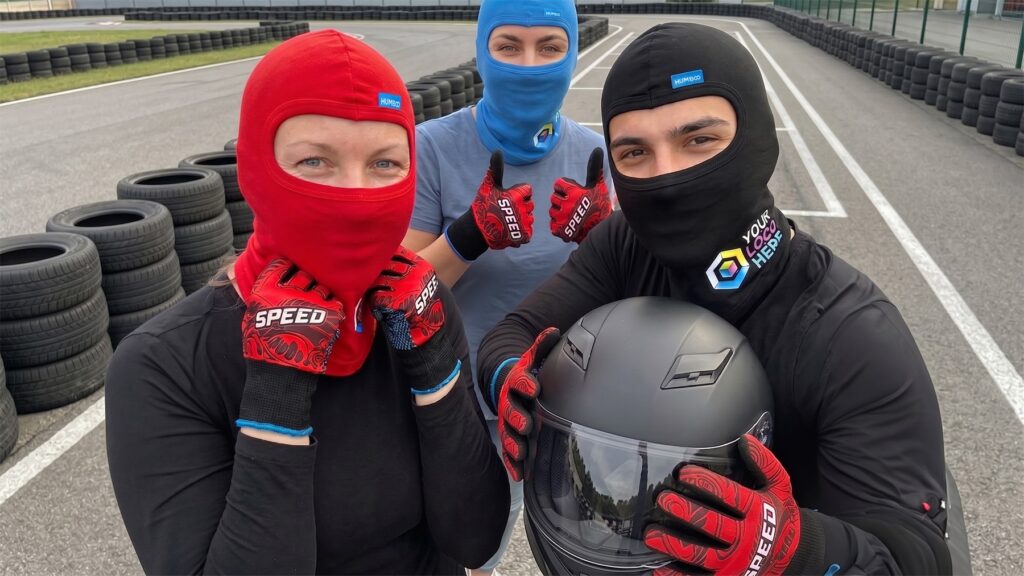
Balaclava is much more than a regulatory requirement—it is a key hygiene barrier and an element that supports driver safety. Learn how this inconspicuous piece of equipment affects helmet microbiology, your concentration behind the wheel, and the image of your professional facility. Discover 5 key reasons to use balaclavas in the daily operation of your track.
To keep your business running smoothly and ensure that your customers rate your service as professional, you need to focus on three product parameters:
microbiological barrier – protection of the lining against bacteria and fungi (crucial during equipment rotation),
stabilization and thermoregulation – elimination of helmet shifting and sweat dripping into the eyes,
mechanical protection – a layer that protects the skin against friction and splinters.
A good supplier should guarantee products that are safe for the skin and comply with EU standards, offer quick customization (wash-resistant branding), and ensure consistent stock availability. If you check these boxes, you’ll avoid 90% of the problems: musty odors in helmets, complaints about skin irritation, and negative feedback about hygiene standards at your facility.
table of contents
1. Hygiene first: Microbiological barrier
In the dynamic environment of kart rental, a single helmet can be used by a dozen or so drivers in a single day. Without proper protection, the inside of the helmet becomes an incubator for microorganisms, which drastically lowers the sanitary standards of the facility. This is one of the most important arguments on the list of 5 key reasons to use balaclavas.
Pathogen filtration: The scalp has a dense network of sweat glands. During a race, the temperature under the helmet rises, which promotes the growth of bacterial and fungal flora. Balaclava absorbs sweat, sebum, and dead skin cells before they penetrate the EPS structure of the helmet.
Extended equipment life: Human sweat is acidic, which chemically degrades cushioning materials over time. Thanks to balaclavas, the service life of the helmet fleet increases by nearly 40%, generating real savings for the track.
Keep in mind, however, that not every balaclava chemically safe—read what track operators need to know about REACH standards and balaclavas certification.
2. Driving comfort: Thermoregulation and concentration
Comfort in karting is not a luxury, but a factor that directly affects safety and lap times. Failure to manage moisture properly can lead to loss of concentration at the most crucial moments of the race.
-
Moisture Management: Sweat running into your eyes while navigating tight chicanes is every driver's enemy. balaclava as a buffer tank that stabilizes the microclimate under the helmet and reduces thermal stress.
-
Helmet stabilization: Rental helmets rarely fit every head shape perfectly. balaclava the micro-gaps and increases friction, preventing the helmet from shifting uncomfortably during sudden head movements and high lateral G-forces. The choice of balaclavas material balaclavas affects thermoregulation effectiveness—see how cotton and technical polyester differ in real-world track conditions.
3. Protection in the accident
Although amateur karting is safe, balaclava is a "second skin," protecting the most sensitive parts of the face and neck. This is another item on the list of 5 key reasons to use balaclavas, which is often overlooked by novice racers.
-
Friction reduction (Skin Friction): The helmet lining can become rough after many cleaning cycles. Balaclava eliminates direct contact between the material and the skin, preventing painful chafing around the ears and temples.
-
Protection against debris: On open tracks, drivers are exposed to dust, rubber particles, and gravel. Extended balaclava protecting the neck provides the first line of defense against these particles.
4. Professional appearance and sports psychology
The psychological aspect has a huge impact on the so-called customer experience. Professional preparation for driving builds the track's reputation as a safe and well-designed place in every detail.
-
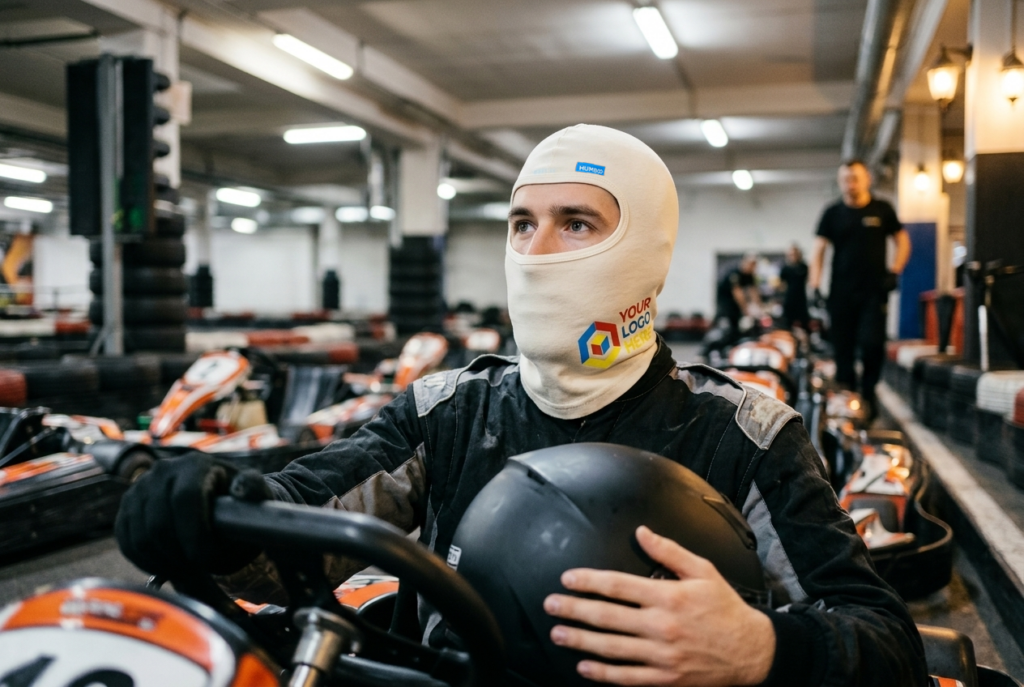
Racing Metamorphosis: Putting on balaclavas is a rite of passage for the customer—from amateur to race car driver. The phenomenon of enclothed cognition proves that clothing specific to a given discipline improves the driver's focus and confidence.
-
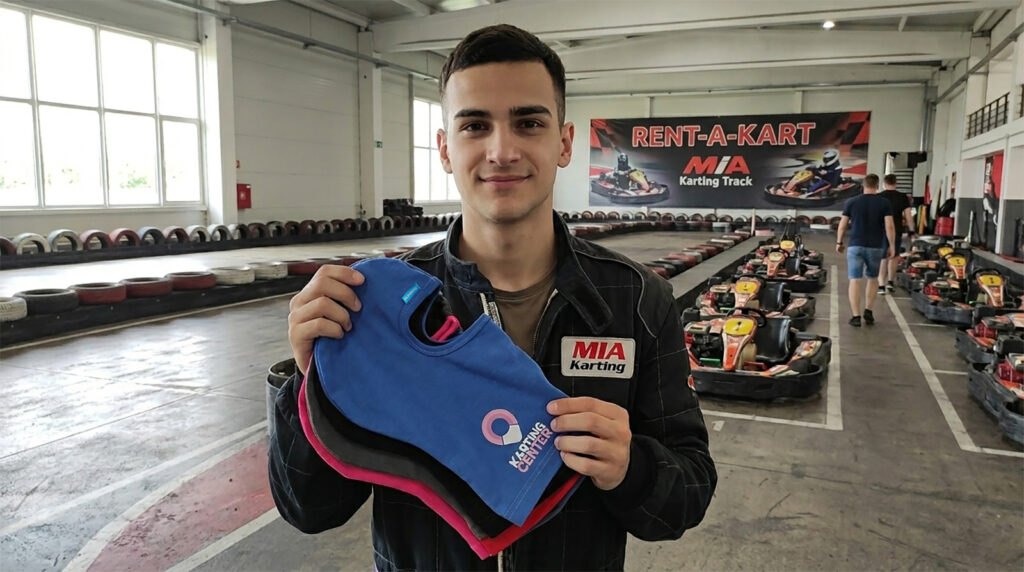
Premium effect: Tracks offering visually consistent, branded accessories are perceived as professional facilities. This builds trust in the technical standards of the track even before you take your seat in the go-kart.
5. Marketing and brand identification: Advertising that goes home with you
For the track owner, a balaclava is one of the cheapest and most effective word-of-mouth marketing tools, which continue to promote the brand long after the session is over.
Highly useful gadget: Unlike a flyer, a balaclava with the track logo is a desirable item. Customers take it home and use it for other activities (skiing, cycling), exposing your brand to completely new audiences.
Building Loyalty: Owning balaclavas custom balaclavas the logo of your favorite venue fosters a sense of belonging to the track community. It’s a simple way to turn a one-time customer into a regular who identifies with your brand. Find out how balaclava can actually impact your profit margin and the purchasing decisions of track customers.
Summary: Is it possible to ride without balaclavas?
From a business, technical, and hygiene perspective – absolutely not. Analyzing 5 key reasons for using balaclavas, it is clear that this is an investment in service quality and equipment durability. Balaclava guarantees hygiene, maximum comfort, additional passive protection, a professional image, and a powerful marketing tool. On a modern karting track, it is not just an accessory—it is the foundation of safe and professional motorsport.
FAQ
Why balaclava called a "microbiological barrier"?
Because it provides a physical barrier between the scalp and the inside of the helmet. Rental helmets are used by many people every day, and balaclava prevents the direct transfer of bacteria, fungi, sweat, and dead skin cells to the helmet lining.
How does balaclava savings for the track owner?
The main factor is helmet protection. The acidic reaction of human sweat destroys the shock-absorbing material (EPS). Thanks to balaclavas, which absorb moisture, the service life of the helmet fleet increases by approx. 40%, which delays the need to purchase new equipment.
How balaclavas the presence balaclavas the driver's thermal comfort?
The balaclava is a "buffer tank." It stabilizes the microclimate under the helmet, wicking away moisture and preventing the head from overheating, which directly translates into lower thermal stress during the race.
Can a balaclava improve lap times?
Individually – yes. By stabilizing the helmet (filling the gaps between the skull and the helmet), it eliminates its "floating" in turns. In addition, it prevents sweat from running into the eyes, allowing the driver to fully concentrate on the driving line rather than on discomfort.
What protective function does balaclava perform balaclava the event of an accident or abrasions?
It acts as a "second skin," reducing skin friction between the face and the helmet lining, which can become rough after repeated cleaning. It also protects the neck from rubber particles, dust, and gravel, which is crucial on outdoor tracks.
Why balaclava is a better advertising medium than a traditional flyer?
Flyers usually end up in the trash, while balaclava is a highly useful gadgets. Customers take them home and often use them for other sports (skiing, cycling), becoming mobile ambassadors for your track in new environments.
What are the main risks of riding without balaclavas a professional track?
Ignoring this element leads to the rapid appearance of a musty smell in helmets, customer complaints about poor hygiene (skin irritation), and a deterioration of the track's image as a facility with low sanitary standards.
Sources:
ISO 11092:2014 – Textiles — Physiological effects — Measurement of thermal and water-vapor resistance.
Peralta, J. (2018). Microbial contamination in shared protective equipment. Journal of Occupational and Environmental Hygiene.
McIntosh, A. S. (2011). The biofidelity of helmets in impact and friction. British Journal of Sports Medicine.