Polyester balaclava or cotton balaclava? Comparison for business
If your customers are highly active, use reusable equipment, and you operate in variable conditions, polyester balaclavas will be a safer and more predictable choice for you.
If you engage in short recreational activities in dry conditions and are looking for a low unit price, cotton balaclavas will do the job.
table of contents
1. Why balaclavas material matter to your business?
A balaclava is not a "minor accessory." In practice, it affects:
the comfort and safety of your customers,
the smell and condition of the helmets,
amount of staff work (maintaining helmet hygiene),
equipment turnover rate,
the number of complaints and complaints,
seasonal costs, which are often not visible at the time of purchase.
However, it is important to remember that the choice of material is not just a matter of functionality—every balaclava on the market must also comply with legal requirements (including REACH and GPSR).
We discuss the specific responsibilities of track operators and the consequences of failing to meet them in a separate article: Safety of balaclavas – REACH and Safety Gate standards.
Therefore, the question "polyester or cotton?" should be replaced with another: under what conditions and for how long do my customers actually use balaclavas?

2. balaclava or cotton balaclava ? Comparison table for B2B
| Polyester balaclava | Cotton balaclava | |
| Purchase price | Higher | Lower |
| Customer comfort during exercise | Stable, predictable | Falls when wet |
| Sweat management | Wicks away moisture | Stops sweat |
| Drying time | Very short | Long |
| Impact on helmets | Sweat can get into the lining | Protects the lining (short term) |
| Washing durability | Very high | Limited |
| Staff work | Minimum | Additional activities |
| Hygiene during rotation | High | Decreases with intensive use |
| Best use | Sports, winter, long sessions | Recreation, short sessions |
3. Moisture management and hygiene: Polyester vs. Cotton

From the end customer's perspective, moisture means discomfort.
From your perspective means unpleasant odors, dissatisfaction, and extra work for the staff.How polyester behaves
Polyester does not retain moisture. Instead, it wicks sweat and water vapor away from the fabric, where they can evaporate. Thanks to its very low moisture regain (less than 0.5%), balaclava is balaclava ready for reuse Source: Don’t Sweat It: How Moisture-Wicking Fabrics Keep You Cool and Dry.
What does this offer you?
-
shorter drying time after washing,
-
faster turnover,
-
less risk that the customer will receive a "damp" balaclava.
How does cotton behave?
Cotton absorbs moisture very effectively. After the degreasing process in production, it becomes highly hydrophilic and can absorb many times (up to 27 times!) its own weight in moisture. [source: Cotton Morphology and Cellulose Chemistry].
In a short session (e.g., a ride on a go-kart track), this is an advantage: sweat does not get into the helmet, and the customer feels dry on their skin.The problem begins with prolonged use:
-
wet cotton takes a long time to dry,
-
sticks to the skin,
-
increases friction and the risk of chafing,
-
deteriorates the experience with prolonged use.
Studies show that the friction caused by a wet fabric rubbing against the skin is more than twice as high as that caused by a dry fabric Source: Effect of fabric parameters on the friction between woven fabrics and human forearm skin.

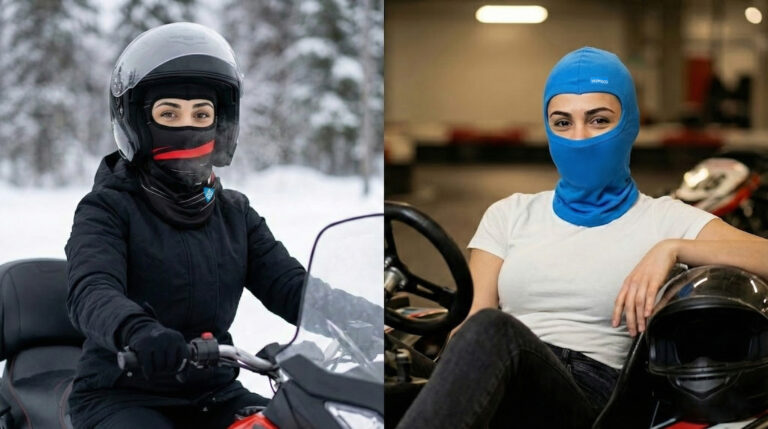
4. Winter and outdoor activities – when polyester wins in terms of safety
If your customers:
ski,
use snowmobiles,
are outside for a long time,
moisture becomes a threat, not just a nuisance.
Cotton in winter
becomes saturated with sweat,
loses its insulating properties,
water vapor condenses on the material,
may freeze at low temperatures.
The result: the customer freezes, and the experience of the activity is worse—even if the equipment itself was great.
Polyester in winter
retains insulation even after moisture exposure,
reduces freezing,
better protects the customer during exercise.
For you, this means fewer complaints and greater customer confidence.
5. Karting and quad biking in summer – the role of balaclavas in rental shops
In summer, the situation becomes more complicated, especially in karting and quad biking.
Cotton – quick relief
Cotton balaclava :
absorbs sweat,
protects the helmet lining,
makes a pleasant first impression.
This is a great, economical choice if your sessions are short and your clients change quickly.
Polyester – stability
Polyester balaclava :
does not retain sweat,
allows it to partially evaporate through the helmet's ventilation system,
remains comfortable even during prolonged use.
If your customers drive longer or more intensively, polyester gives more predictable results.
6. Hygiene and scent – an experience that customers remember
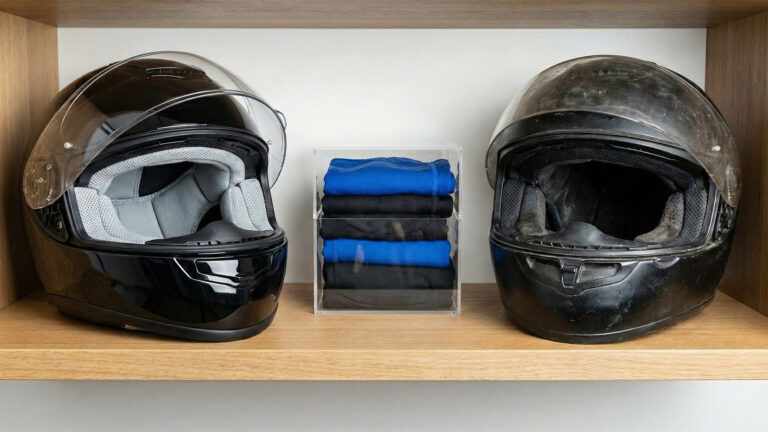
Balaclava is the first hygienic barrier between your customer and the helmet. This keeps the helmet fresh for longer, which is crucial in rental shops.
Research from Ghent University, cited by the NCSF website, has shown that Micrococci bacteria—which cause unpleasant sweat odors—multiply more easily on polyester. Polyester T-shirts were rated as “significantly more smelly” after exercise.
Source: Cotton vs. Polyester: What to Wear to Reduce Body Odor. https://www.ncsf.org/blog/152-cotton-vs-polyester-wear-to-reduce-body-odor
In practice, hygiene depends not only on the material, but also on:
washing frequency,
the duration of a given physical activity and drying time,
quality of weave and finishes.
Summary: what to choose for your business?
Choose cotton balaclavas if:
you run a recreational karting business,
the sessions are short,
you work mainly indoors,
you care about a low unit price,
you treat a balaclava as simple hygienic protection.
Depending on the season and how you want to promote your business, choose the appropriate weight of cotton fabric, such as 160 g, 200 g, or 220 g.
Learn more about choosing the right weight
Choose polyester balaclavas if:
you work in sports or outdoor activities,
customers sweat profusely,
you use reusable equipment,
you want to reduce operating costs on a seasonal basis,
you care about consistent quality of experience.
An added benefit in this case is the wide range of attractive designs made possible by sublimation printing on polyester.
How fabric weight and weave affect thermoregulation and fabric selection in practice →
Final conclusion
There is no single "best" material. There is only the material that is best suited to the actual conditions in which your company operates.
Conscious choice of balaclavas is a decision that:
improves customer comfort,
reduces operational problems,
realistically reduces costs in the long term.
FAQ
Does balaclava protect a helmet from sweat better than a polyester one?
In the short term – yes. Cotton can absorb moisture exceeding its own weight by up to 27 times. Thanks to this, during a short 10-minute session on the karting track, sweat remains in the material and not on the helmet lining. However, with prolonged use, wet cotton becomes heavy, cold, and takes a long time to dry.
Why is balaclava recommended for professional sports and outdoor activities?
Polyester has a very low moisture recovery rate (below 0.5%), which means that it does not store water but transports it outside. This is crucial for maintaining insulating properties in winter and preventing the material from freezing against the face.
Which balaclavas material is more hygienic for intensive use?
From the perspective of bacterial growth, cotton wins. Studies have shown that Micrococci bacteria, responsible for unpleasant odors, grow faster on polyester. Therefore, in the case of balaclavas , it is crucial to use appropriate technical weaves and wash them regularly to avoid customer discomfort.
Does wet balaclava cause chafing for customers?
Yes. Studies show that the friction of wet fabric against the skin is more than twice as high as that of dry fabric. Since cotton dries much more slowly, the risk of skin irritation in customers during long activities is higher than when using polyester.
What material should you choose for a balaclava?
The choice depends on the intensity of your customers' activity and the conditions in which you operate:
Choose polyester if your customers sweat heavily, or if you operate in sports or outdoor activities (e.g., skiing, snowmobiling). This material quickly wicks moisture away and dries quickly (moisture wicking below 0.5%), allowing for quick equipment rotation in rental shops. It is also safer in winter because it retains its insulating properties even when wet.
Choose cotton if you engage in short recreational sessions in dry conditions, such as indoor karting tracks. Cotton effectively absorbs sweat, protecting the helmet lining during short rides. This is the most economical solution if you care about low unit price and treat the balaclava as a simple hygienic barrier.
Is polyester balaclava suitable for skiing?
Yes, polyester balaclava is a much better choice for skiing than a cotton one, as it provides better protection for the skier in changing winter conditions.
Heat retention: Polyester retains its insulating properties even when it becomes damp from sweat or breath vapor.
Moisture management: This material does not store water, but transports it to the outside, keeping the skin dry during exercise.
Protection against frost: Unlike cotton, which absorbs moisture in winter and can freeze, polyester limits this phenomenon, preventing the face from getting cold.
- Comfort under your helmet: Thanks to its quick-drying properties and low moisture recovery rate (below 0.5%), balaclava ensures comfort even during all-day sessions on the slopes.
Should balaclava cover the nose?
Yes, a balaclava should cover the nose, especially during intense exercise and low temperatures, to protect the airways from cold air. In the case of polyester models, this material effectively wicks water vapor from your breath to the outside, preventing it from condensing and freezing on your face. This not only provides greater thermal comfort, but also better hygiene and protection for your skin against irritation caused by friction from wet fabric.
How to choose a balaclava?
The choice of balaclavas depends primarily on the intensity of your customers' exercise and the conditions in which you operate.
Here's how to choose the right material:
Polyester balaclava : Choose this one for winter sports (skiing, snowmobiling) and outdoor activities, as it wicks sweat away and dries quickly. It is more durable, resistant to frequent washing, and retains its insulating properties even when wet.
Cotton balaclava : Suitable for short recreational sessions (e.g., indoor go-karting) as simple hygienic protection. It absorbs sweat very effectively (up to 27 times its own weight), but takes a long time to dry and can cause skin abrasions when wet.
Impact on business: Polyester allows for faster equipment turnover in rental companies, while cotton is an economical solution for short-term use.
How balaclava affects the lifespan of helmets in a rental shop?
Balaclava is the first hygienic barrier, trapping sweat and skin flakes and preventing them from penetrating the helmet lining. This keeps the helmets fresh for longer, reducing the need for frequent deep cleaning and lowering the facility's operating costs.
Which material is better at preventing fogging of goggles or helmet visors?
Polyester is more effective in this case because it transports water vapor from your breath to the outside of the material instead of storing it. Cotton absorbs moisture and quickly becomes wet, which promotes condensation under the goggles and can lead to them freezing in low temperatures.
- Rohrig, B. (2022, October 7). Don’t sweat it: How moisture-wicking fabrics keep you cool and dry. inChemistry (ACS Student Magazine).
- Cotton Incorporated. (n.d.). Cotton morphology and cellulose chemistry. Cotton Incorporated. Retrieved February 10, 2026.
- Razzaque, M. M. (2025). Effect of fabric parameters on the friction of woven fabrics with human forearm skin. Journal of Textile Engineering & Fashion Technology, 11(3), 144–151.
- National Council on Strength and Fitness. (n.d.). Cotton vs polyester: What to wear to reduce body odor. National Council on Strength and Fitness. Retrieved February 10, 2026.