Mandatory cotton balaclava for the Kart-Rental Track: 5 Questions We Hear Most Often
- A visitor to your track is already putting something under their helmet today —a disposable hairnet, a fleece balaclava—or nothing at all, in which case the staff disinfects the helmet lining with little effect.
- You’re introducing a “ balaclava required on the go-kart track” policy —similar to the rules for helmets or closed-toe shoes. A customer who comes without their own buys one from you to keep. A customer who brings their own (from a previous visit here or elsewhere) simply gets to drive.
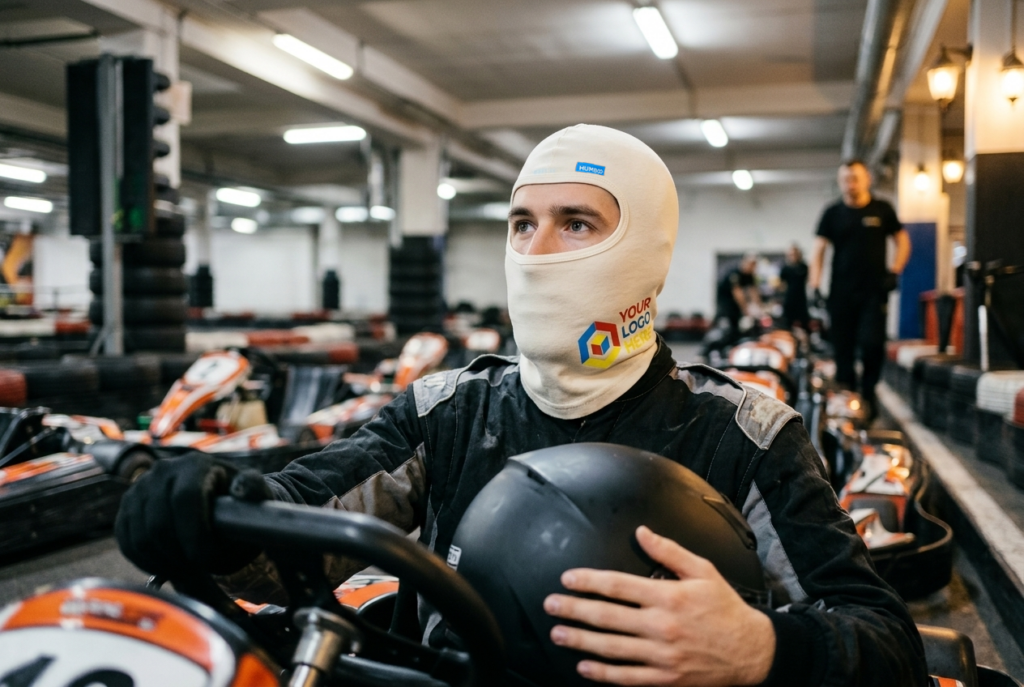
- A cotton balaclava with your logo, sold to customers who come to the track without their own, becomes a product with a real profit margin instead of a cap that you throw away after every session.
- The model is currently in use at several hundred facilities in Central Europe, the UK, Germany, and, increasingly, in parts of France and Italy. In many markets, it has been the standard for many years.
- Operating profit based on sales data from several hundred locations across the EU: a typical location sells ~650 “ balaclavas ” with the logo per month; at a realistic margin of 1.50 € , this amounts to 975 € per month, or 11,700 € per year —from a single display at the front desk, without any advertising campaign.
table of contents
Introduction
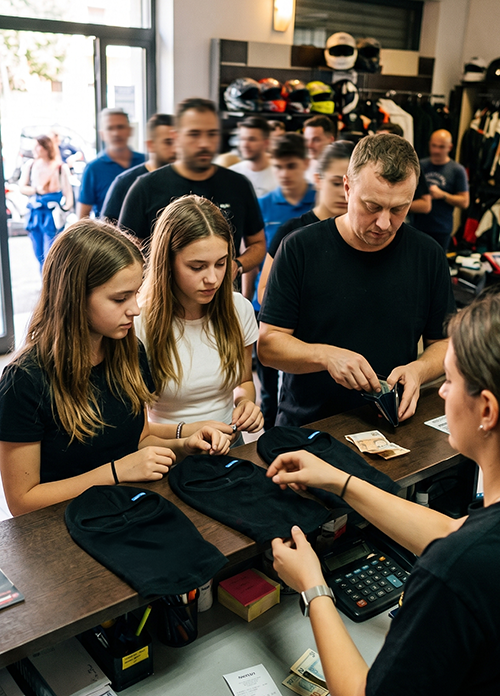
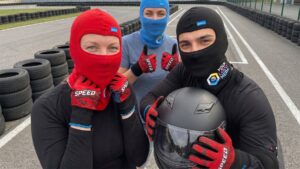
Saturday, a quarter past six, the racetrack near Rome. A father with his two daughters asks at the ticket window for “ balaclavas.” He pays nine euros and receives three items bearing the racetrack’s logo.
A year ago, he would have taken three disposable caps from the pile, provided at the operator’s expense. Today, he pays eight or nine euros for three caps and leaves with a product he might also use during his next visit—and the owner of the track is ending July with greater peace of mind for the first time in a long while.
In many countries, the karting industry has for years taken one-time payments for granted, as something that goes without saying. This owner stopped doing that—and that was his entire advantage.
Having once owned our own track, we know what’s needed for one. For over a dozen years, we’ve been sewing balaclavas for other facilities.
We printed 1,300 logo designs on them and heard hundreds of questions and stories from go-kart track owners about how they were using our product.
Below are five questions we hear most often from operators in Southern Europe—along with what works in other markets and what doesn’t.
Before we answer: What can be seen in France
France is one of the largest bike-rental markets in the world, but when it comes to balaclavas , it’s a new market. As recently as 5–7 years ago, cotton balaclava was a rarity there. The standard was a disposable hygiene cap or—at many facilities—no head covering under the helmet and disinfection of the lining that had only a short-lived, weak effect.
A disposable cap? To put it bluntly: a product that covers your hair but gets soaked with sweat after three minutes, and doesn’t cover your nose or mouth at all. It offers minimal hygiene benefits. But since everyone was doing it, everyone kept doing it.
A few operators took the plunge. They introduced a simple rule: no balaclavas under your helmet, no go-karting. If you have your own, you can drive. If not, you buy one on the spot—a helmet with the track’s logo that’s yours to keep. Customers didn’t complain. They accepted it just as they had previously accepted the helmet requirement.
After a season or two, the neighbors started doing the same thing. Today, many French tracks operate under this model, though there’s still a group that hasn’t gotten rid of the caps yet.
Request for a track owner in Spain, Portugal, or Italy
(or anywhere else):
You don't have to be the first.
Someone has already implemented this change at a thousand locations in a large market, and customers haven’t left.
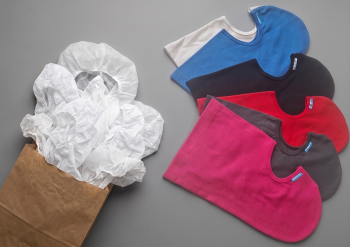
1. Why would I use cotton balaclava when I'm giving away free disposables?
Because a disposable item is a closed-loop cost—you buy it, give it to customers, and throw it away.
Cotton balaclava with your logo work differently: A customer who comes in without their own towel buys one from you and takes it home. A week or a month later, they come back with their own. In the meantime, you’re selling balaclavas to new customers.
It all depends on the unit you're using to calculate it.
Not in the profit margin per unit, but in the profit for the season.
Sales data from several hundred tracks across the EU show typical volumes:
balaclavas with the logo
sold per month
in a realistic scenario
€1.50 profit marginin a realistic scenario
€1.50 profit marginFrom a single item on the receipt, without changing the ticket price list and without an advertising campaign.
You’ll find the full calculations—ranging from a conservative to an optimistic scenario—in the article: “Why balaclava with a logo sells better”
And that's not even counting the savings on the other side—on helmet liners, which wear out faster without an intermediate layer.
Let’s be honest: it’s going to take some work. You’ll need to update the price list, add a new item for the staff, and answer the same question (“What’s this?”) for the first week. But it’s a one-time effort—and in return, you’ll improve your cash flow and the quality of your services.
2. Won't customers perceive the requirement to have balaclavas as a hidden fee?
No—as long as you make it clear right away. A “hidden fee” occurs when a guest at the track discovers an additional cost after the fact or at the register, to their surprise.
If the staff informs guests of the requirement balaclavas at the very first point of contact—on the website, during booking, on a sign at the reception desk, or in the staff script —it doesn’t cause any upset. It’s simply a condition for driving on the track, just like removing jewelry or tying back long hair.
A Real-Life Reception Scenario:
A customer approaches the register: “It’s a 15-minute drive.”
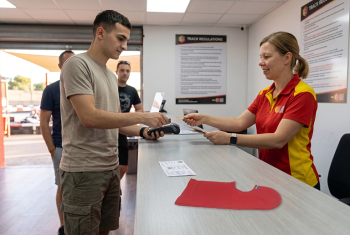
Receptionist:“Do you have your balaclava? You can’t ride without balaclava … You don’t have one? Balaclava costs 3 euros—it’s a one-time purchase, and you can take it home. Next time you bring it with you, you won’t have to buy another one.”
The customer looks at the receipt and sees two items: a €20 ticket and a €3 “ balaclava .” They pay once, receive the receipt and a balaclava, and head to the orientation session, then to the helmet distribution area. They put on the balaclava and helmet and get into the go-kart.
Balaclava's sale is made when an employee treats the handover as part of the process, rather than as an additional sales pitch.
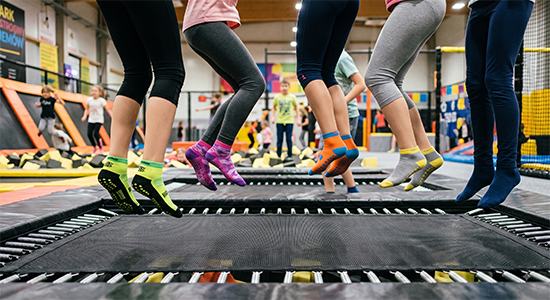
Check out the trampoline park, a nearby entertainment venue:
"Admission is 6 euros, non-slip socks are 3 euros—unless you have your own."
No one makes a fuss—everyone knows the drill.
Balaclava on the track is in the same category.
And what happens if a customer doesn't says upon entering, “I have my own”?
The receptionist enters the ticket—20 €. The whole process takes just as long as it does today. The only difference is on the receipt—two items or one.
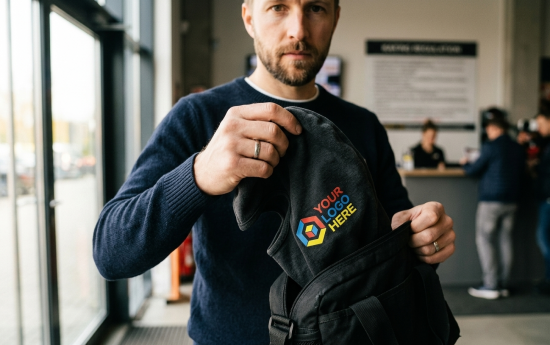
Italy again, a track near Turin. The owner introduced this rule at the end of 2023.
The first two weeks: two complaints out of 400 customers.
After three months: none.
After a year: customers themselves say, “I left the one from last time in the car, so I’ll take a new one,” or “I have my own.” The same trend is starting as with reusable bottles—customers are bringing their own equipment.
One factor that determines the success of this change is the front desk staff.
ONE SENTENCE FOR THE TRACK STAFF TO PRACTICE:
Yes
"You can't drive without a ' balaclavas '—do you have your own, or should we buy one?"
Not like that
"Would you like to..."
"We also have…"
"We recommend our…"
CONDITION - SELECTION
3. Cotton balaclavas on the track mean laundry and logistics. Is it worth it given my rotation schedule?
Don't wash it. The model that’s actually in use today on hundreds of tracks across Europe involves selling balaclavas to the customer for their own use. The customer buys a balaclava, wears it, and takes it home. There’s no maintenance on the track, and there doesn’t need to be.
Industrial laundry involves operating costs — labor, equipment, electricity, and chemicals — and results in lower service quality.
The customer sees the difference between something new, made just for them, and a worn-out item that’s already been worn by dozens of people. The experience at the track begins with what the staff hands them.
The sales model operates on a thousand tracks, including in Central Europe, the UK, Germany, and parts of France and Italy. Millions of trips per year. A track that only takes in revenue and pays it out loses money every weekend.
How much do you actually make from this?
Verified sales data from several hundred retail outlets across the EU (full calculations—see the article: “Why balaclavas with logo sell better”) show that a typical store sells approximately 650 logo-branded balaclavas per month, and market margins range from €1.00 to €2.00 per unit.
This leaves us with three realistic scenarios:
| Scenario | Sales / month | Margin per unit | Gross profit / year |
|---|---|---|---|
| Conservative (half the typical volume) | 325 pieces | 1.00 € | 3,900 € |
| Realistic | 650 pieces | 1.50 € | 11,700 € |
| Optimistic | 650 pieces | 2.00 € | 15,600 € |
Even in the most conservative scenario —half the volume, the lowest margin— we're talking about just under €4,000 per year from a single item at the reception desk, without an advertising campaign.
Realistically: 11,700 €.
On top of that, there’s slower wear and tear on helmet liners (fewer replacements, fewer complaints about odor) and free advertising: balaclava with your logo generates about 3,400 views over its lifetime, at a cost per viewer of about 3/10 of a cent. A customer who takes it to a neighboring track gives you exposure that no one has billed you for.
4. Is the cotton balaclava hygienic and safe when sharing a helmet?
Yes. For short helmet rental sessions (5–15 minutes), cotton works great. It absorbs sweat deep into the fibers, protects the helmet lining from odors, and is gentle on the skin. To put it simply: it’s much better than a disposable hair cap, which just covers your hair and does nothing else.
A short session and a long line are the worst combination for the helmet lining. A customer gets off the ride sweaty after eight minutes, and four minutes later, the same person puts that same, still-damp helmet on the next rider.
Cotton breaks this vicious cycle: it absorbs sweat, releases it as it dries, and the customer gets a drier helmet. The liner wears out more slowly, and the customer doesn’t complain about the smell (see articles: “Cotton vs. Moisture-Wicking Materials” and “5 Key Reasons to Use balaclavas”).
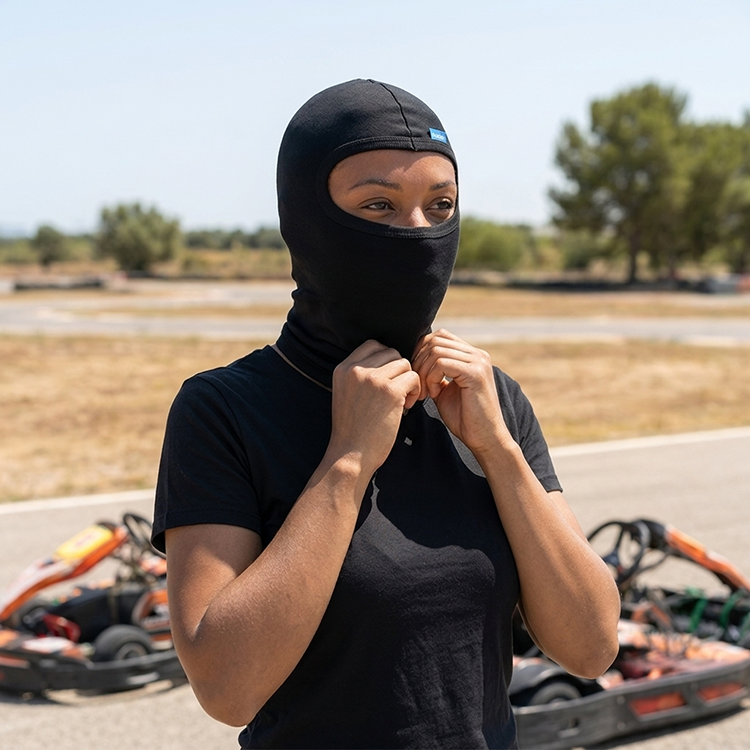
From experience at go-kart tracks:
Have you ever wondered why girls are less likely to return to the track after their first session?
Not necessarily because they didn't enjoy riding. Often, it's because , after putting on their helmets, they smelled the sweat of the three previous riders or the cigarette smoke from the parking lot in front of the venue.
Women plan birthday parties, bachelorette parties, and company parties.
A fresh, crisp balaclava with your logo is often the difference between “let’s go again” and “I suggest something else.”
If you still have doubts about the cleanliness of the helmets at your facility —here’s a simple test.
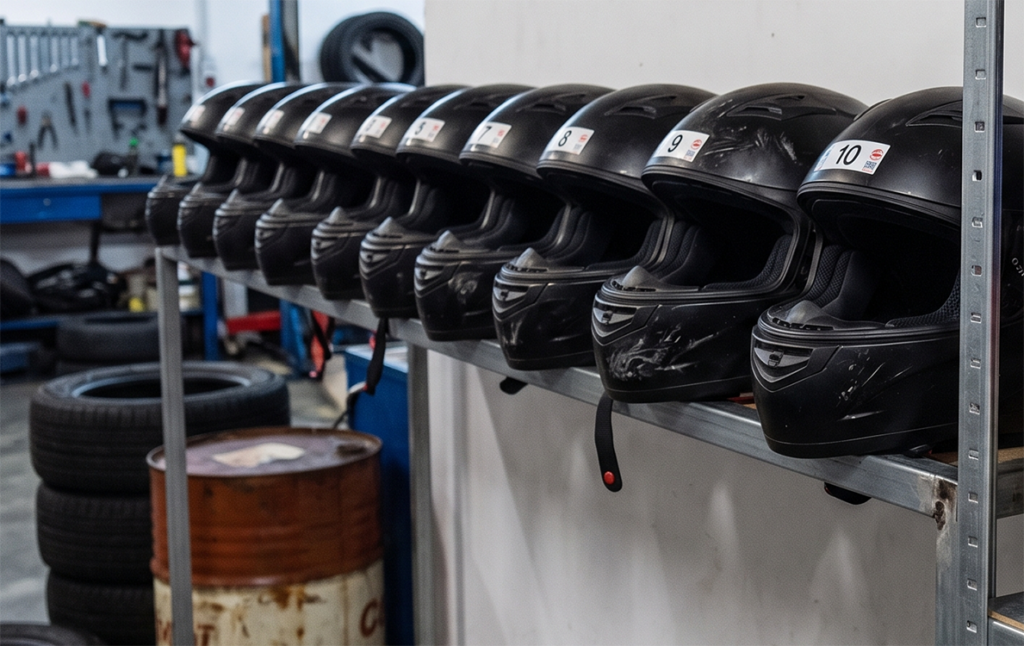
On Wednesday morning, grab the first helmet you see—the one that a dozen or so riders wore yesterday.
Put it on for three minutes. Take it off.
Would you hand that same helmet to someone on your team to try on?
If the answer is “probably not”—you’ve seen your customers through the eyes of someone who takes that helmet off after the first ride.
A separate legal issue that is often overlooked
When you sell a product to a customer that comes into direct contact with the skin or face, you are responsible for ensuring its compliance with REACH and GPSR (EU Regulation of December 13, 2024).
A product without a label that correctly lists the ingredients and batch number (a common occurrence with imports from the Far East) exposes you to fines and an entry in the Safety Gate registry.
An EU supplier with certification, documentation, and a warranty transfers this responsibility to the manufacturer and gives you peace of mind in the event of an inspection. We’ve broken this down in the article: “ balaclavas Safety – REACH and Safety Gate.”
5. Isn't a cotton balaclava too hot for the track in the summer?
No. And here’s the paradox that many riders don’t see: it’s not the balaclava that heats up the rider’s head, but the enclosed space under the helmet —heat and moisture have nowhere to escape except through the vents. It’s hot under the helmet anyway, regardless of what you have between your head and the lining. balaclava —whether thinner or thicker—is there to keep sweat from soaking into the foam and to keep sweat from streaming into your eyes when cornering.
A lightweight, low-weight balaclava works great in the heat: it wicks away moisture, absorbs sweat from your forehead, and feels comfortable against the skin.
A thicker knit, such as 200 gsm or 220 gsm, also has its place. It absorbs more sweat during an hour of birthday fun with an entertainer and better protects the head from a heated lining.
The choice between “thinner or thicker” depends on the intensity of use, the season, and how you want to position your track—not on concerns that the cotton will get too hot.
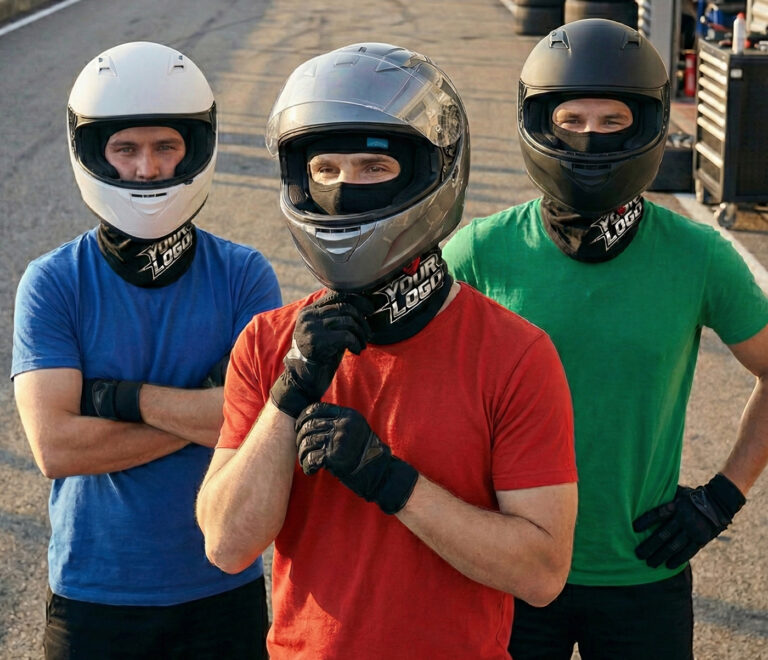
The myth about overheating stems from confusing the heat source (the helmet) with the intermediate layer (balaclava).
High-quality cotton with up to 5% elastane, designed for the season—it genuinely improves riding comfort in the heat by keeping sweat away from your eyes and the helmet’s foam lining. For more details on how to choose the right one, see the article: “How to Choose a Balaclava? Weight, Weave, and Material vs. Temperature.”
The losses could run into the thousands of euros. However, if each balaclava its own “identification code,” you can prove that your batch comes from a reliable source or recall only the 200 items that raise concerns.
What to Do This Month
Three steps to get something concrete out of this article, rather than just a list of wishful thinking.
- Include two things in the rules: the requirement to wear a balaclava ( balaclavas ) under the helmet (a condition for riding, just like the helmet itself) and the price for customers who don’t have their own. Not “included in the ticket price,” not “free”—a clearly stated amount of 3, 4, or 5 euros. Customers with their own balaclava pay only for the ticket.
- Choose a product from the EU that comes with complete documentation (REACH, GPSR, lot number, manufacturer’s warranty). Importing from the Far East without a label isn’t a cost-saving measure—it’s a risk of being flagged in Safety Gate.
- Teach the front desk staff a few phrases: “You can’t ride without a ‘ balaclavas ’—do you have your own, or should we buy one? ‘ balaclava ’ is a one-time purchase. You take it home with you. Next time you bring it back, you don’t have to buy another one.”
The same customers who order something from the bar menu will buy a balaclava without hesitation—if the staff hands it to them without hesitation, without any fuss, and without having to be asked.
It's no big deal. One policy at the front desk that, for years, has been providing free shower caps at your expense. Changing this one policy could put you in the black for the month—a figure that’s currently missing from your ledger.
FAQ
How much will I actually earn if I require customers who come in without their own to purchase balaclavas ?
Sales data from several hundred retail channels in the EU: typical volume is 650, balaclavas s with logos per month; market margins range from 1.00 to 2.00 € per unit. A realistic scenario (€1.50 margin) yields €975 per month, or €11,700 per year. A conservative scenario (half the volume, lowest margin) yields €3,900 per year. Added to this is the slower wear and tear of helmet liners. Full calculations, ranging from the conservative to the optimistic scenario, can be found in the article: “Why balaclava with a logo sells better.”
Can a customer who brought a balaclava from another track use it on my track?
Yes, and this is the generally accepted industry standard. The riding requirement applies to the function (“balaclava under the helmet”), not the logo. Keep in mind that your logo on the balaclava will also appear on competitors’ tracks.
Does a go-kart track have to wash balaclavas cotton items?
No, and we advise against such practices. The model that works on thousands of tracks across Europe is selling for personal use—the customer buys it and takes it home. Mass laundering generates real costs and lowers the quality of service: customers can tell the difference between something fresh and something that’s already been on dozens of heads.
What should you do if a customer comes in for the second time without their balaclavas?
You sell him a new one. It doesn’t hurt you—an extra sale means extra profit. A customer who brings their own device saves you one service call and doesn’t pay again, but their “ balaclava ” with your logo circulates among other locations. Both paths are beneficial for you.
How can we implement a requirement to have balaclavas without customers objecting?
Communicate this just like any other riding requirement —on the website, during booking, at the front desk, and in the service script. Customers don’t object to wearing a helmet or removing jewelry. balaclava falls into the same category—provided you mention it there, not at the checkout. Experience at race tracks shows that after two weeks, customers stop talking about it altogether.
Is cotton suitable for short sessions at a card rental shop?
Yes. During rides lasting 5–15 minutes, the cotton absorbs sweat deep into the fibers, protects the helmet’s lining, and feels comfortable against the skin. Prerequisite: the product must be designed for sports — high-quality cotton blended with spandex, with a weight appropriate for the season—not cheap, low-quality knit fabric.
Isn't a cotton " balaclava " too hot in the summer?
The lightweight balaclava doesn't cause your head to overheat. The source of heat is the enclosed space inside the helmet, not balaclava. Thicker knit fabrics are sometimes even better for intense use because they absorb more sweat during longer sessions. The myth about overheating applies to winter knit fabrics, not balaclavas fabrics designed for karting.
Are imported balaclavas s legal on my track in the EU?
Yes, provided they comply with EU standards. When you sell a balaclava to a customer, you are responsible for ensuring it complies with REACH and GPSR. A product without a label, lot number, and complete documentation exposes you to fines and a Safety Gate entry. Choose certified products from EU suppliers that come with complete documentation and a manufacturer’s warranty.