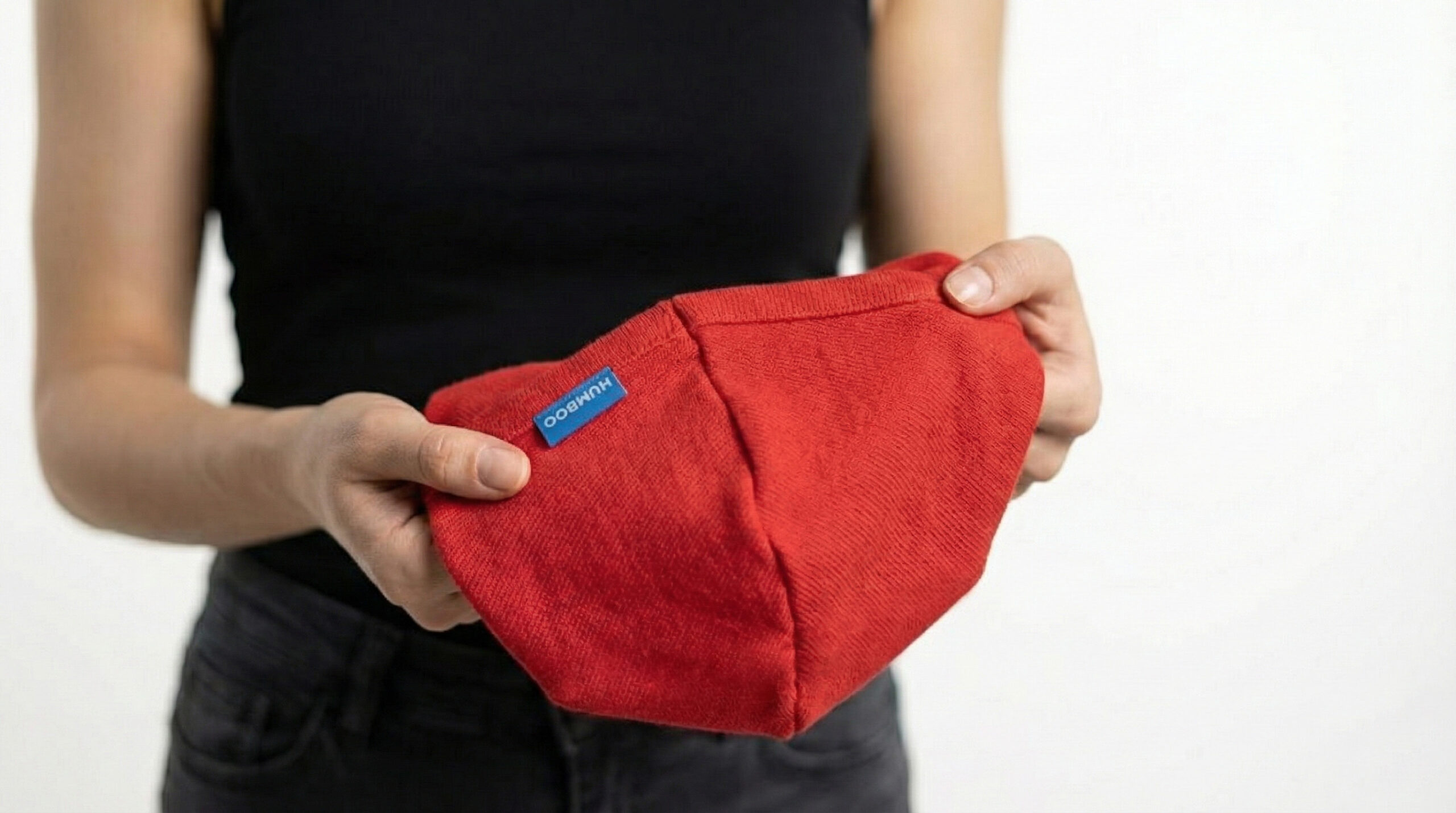
How do you choose a balaclava that ensures comfort and hygiene during physical activity? It’s a crucial layer of clothing that must adapt to changing outdoor conditions. In this article, we’ll examine how fabric weight, weave, and fiber type affect thermoregulation. You’ll also learn which Humboo models are best suited for you, based on practical tips and textile knowledge.
The decision on how to choose a balaclava depends on three factors: temperature, humidity, and intensity of exercise:
Warmth and intense activity → low weight, open weave, quick-drying synthetic materials.
Variable conditions → average weight, balanced fabric structure.
Cold and low activity → high weight, denser weave, maximum insulation.
table of contents
1. The role balaclavas temperature and moisture regulation
Balaclava is the the first layer (base layer) in direct contact with the skin, and is responsible for:
Stabilization of skin temperature.
Effective moisture management.
Protection against overheating or hypothermia.
Maintaining hygiene (especially with frequent use of helmets).
Good to know: Excess moisture on the skin drastically reduces thermal comfort, even if the ambient temperature is moderate.
Source: Moisture Management Properties of Textiles and Their Evaluation, Basuk et al., 2018
2. Fabric weight – theory and practice
Weight (g/m²) is simply the mass of material per square meter. This is a basic parameter that tells us how to choose a balaclava for the weather:
-
Higher weight = better thermal insulation (warmer).
-
Lower weight = better ventilation and instant drying.
Scientific research (including Vasile et al., 2025) confirms that low weight promotes moisture transport, while high weight promotes heat retention. Remember: balaclava that is too thick balaclava humid conditions can cause the material to sweat and cause discomfort.
3. Weave and structure of knitted fabric
The weight alone is not everything. The weaving method is equally important:
-
Open knit fabrics: Guarantee high air permeability.
-
Dense weaves: Provide a barrier against wind and better insulation.
-
Directional structure: Advanced weaves can "push" moisture out of the material.
Dominika Kamińska's (Łódź University of Technology) thesis confirms that yarn density, linear mass, and weave affect sweat transport.
4. Fibers and moisture management
Synthetics (polyester)
Synthetics work well in summer and sports balaclavas, during intense exercise. The main features of polyester include:
rapid moisture wicking
short drying time
low sweat absorption
good dimensional stability
Cotton and natural fibers
Cotton absorbs sweat, while polyester wicks it away, which is crucial in terms of comfort and hygiene. The key features of cotton are:
high sweat absorbency
comfort during low activity
longer drying time
greater weight after moisture absorption
How do these two materials perform in practice, and which one should you choose for your business?
When choosing cotton for a go-kart track, however, it’s important to remember that not all cotton is created equal—the chemical composition of the dyes and the origin of the raw material directly impact customer safety and compliance with REACH regulations.
5. Comparison table of balaclavas weights
| Parameter | Low weight (≤140 g/m²) | Average weight (150–180 g/m²) | High weight (≥200 g/m²) |
| Thermal insulation | Low | Average | High |
| Breathability | Very high | Good | Good |
| Moisture transport | Very fast | Sustainable | Sustainable, but slower |
| Comfort in high humidity | Very high | Tall | Limited |
| Application | Summer, halls, effort | All year round | Cold, low activity |
| Typical material | Polyester | Polyester / cotton blends | Cotton, thick knitted fabrics |
6. How to read balaclavas parameters
To choose the best balaclavas model, it is worth checking balaclavas :
Weight (g/m²) – adjusted to conditions
Fiber type – absorption (cotton) vs moisture wicking (polyester)
Fabric structure – density, breathability
Intended use – intensity, wearing time, humidity
7. How balaclavas fit into different conditions
balaclavas model
terms of use
Weight
Material type
Recommended use
EaseFit 160
Warm and high humidity
160 g/m²
Cotton (100%)
Light conditions, airiness, intense sweating
OptiBalance 200
Moderate and variable conditions
200 g/m²
Cotton (97%) Elastane (3%)
The compromise between insulation and ventilation
FlexyPrime 220
Cool + dry / basic insulation
220 g/m²
Cotton (95%) Elastane (5%)
Greater insulation, sports/outdoor, longer use
Tactic 220 / Panther 220
Cool + neck protection + outdoor
220 g/m²
Cotton (95%) Elastane (5%)
Neck protection, outdoor, colder weather
SpeedLine 160
Cold + intense activity
160 g/m²
Polyester (100%)
Light thermoactivity, quick moisture wicking
Snow 225 / Thermo 225
Very cold conditions / winter sports
225 g/m²
Polyester (100%)
Maximum thermal properties, breathability at low temperatures.
Summary
Knowing how to choose the right balaclava will help you avoid both overheating and hypothermia. If you are looking for maximum breathability, choose EaseFit 160. FlexyPrime 220 will provide you with maximum comfort. For athletes who need thermoregulation, Speedline 160 will be the best choice, and for cold days – models from the Snow or Thermo series.
Still unsure which model is best for you? Contact us—we'll be happy to help you make your decision!
FAQ
What factors are most important when choosing balaclavas?
The decision to choose a specific model depends on three key factors: ambient temperature, humidity, and the intensity of the planned exercise.
What is weight (g/m²) and how does it affect usage?
Grammage is the weight of material per square meter. In practice:
High weight (≥200 g/m²): Provides better thermal insulation, ideal for cold weather.
Low weight (160 g/m²): Guarantees better ventilation and quick drying, best for summer or intense exercise.
When should you choose a polyester balaclava, and when should you choose a cotton one?
Polyester (synthetics): Choose this for intense sports. It quickly wicks moisture away and has a short drying time.
Cotton (natural fibers): Choose this option for lower activity levels or when you want natural comfort. Cotton absorbs sweat but takes much longer to dry.
How does the knit structure affect thermoregulation?
The weave determines air flow. Open knits increase breathability, while dense weaves create a barrier to wind and retain heat better. Advanced directional structures can also "push" moisture out.
Which balaclava best for a karting hall or a hot summer?
The best choice will be a model that can absorb large amounts of moisture. From the Humboo range, the cotton FlexyPrime 220 (high absorbency) or polyester SpeedLine 160 (faster moisture evaporation) models are ideal.
What to choose for very cold days or winter sports?
In extremely low temperatures, maximum insulation is essential. The Snow 225 or Thermo 225 models (made of heavyweight polyester) provide the best thermal properties while maintaining breathability.
Why is moisture management so important?
Excess moisture on the skin drastically reduces thermal comfort. If balaclava wick away sweat, the material becomes wet and cold, which can lead to hypothermia even in moderate temperatures.
Sources:
- Moisture Management Properties of Textiles and Its Evaluation, Basuk et al., 2018;
- Thermal and Moisture Management Properties of Knitted Fabrics for Skin-Contact Workwear, Vasile et al., 2025
- Analysis of thermal comfort characteristics of moisture management finished knitted fabrics made from different yarns, Sampath et al., 2012;
- Shaping the liquid moisture transport properties of cotton fabrics based on their structural parameters, Kamińska, 2024;